I pined over a lot of retro hardware over the past year, there are a lot of competing modern C64 and Amiga hardware, at the core of most of them are FPGAs, so if you want to save money and have a large set of options, get yourself a DE-10 Nano / Mister setup. It's kind of the kitchen sink of retro computing at this point and runs < $200. You can emulate everything from an Apple II, C64, ZX-Spectrum, most consoles through the 90s, Amigas, even a 486 (though it's shaky).
What you won't get is an already set-up system, a nice case, or simple to attach peripherals, but I haven't had too much trouble with it, except trying to get a formatted hard disk for an Amiga into an SD card with files on it, but I figured it out :)
This looks interesting! I’ve long wished for a more mature MiSTer system that feels like a complete retro console/system/computer. There ARE already many options there but involves 3D printed parts, soldering, or more. If I could just throw an added €50-100 on the problem I’d gladly consider it, and this looks promising. I don’t really fancy the official rectangular case. It looks more like a hacker platform. Which, I guess, it is… But…
If you're into this, that's the hardware to get. A massive ecosystem of cores with good software to choose, configure and keep them all up to date.
I just wish the target devboard was among those supported by the open synth/place/route stack. Maybe in the future, somebody will make an OSHW custom board for the purpose, using a well-supported FPGA that could also hopefully be fatter than the one the DE-10 Nano has.
I'm buying one because I have problems but I sincerely think there should be a cut down version. Especially one without a floppy drive (What if you don't actually have any old floppies and just want a cool embedded games platform?)
I mean, I'm not seriously expecting this to be the next big computing platform but I do think that a lower barrier to entry would help adoption.
They also have issues sourcing functional refurbished 3.5" drives, apparently the idea is to potentially move away from the built-in drive entirely after those 1400 units they're building right now.
My issue with this is the price. Not because it’s not worth it, but because it means no one outside of hardcore enthusiasts will buy one, that means very little software will ever be developed for it.
Also I find the presence of the floppy drive in 2021 ridiculous. Yes the C65 had one - but that was a prototype machine from 1990 that was never produced. There’s no c65 software available on floppy disk, so no reason this couldn’t have used sdcards instead.
I’d consider it at €400 (i.e. above a full MiSTer setup price) if it was a well crafted case like this but an Amiga 1200 equivalent with a C64 mode and SD card slot as “floppy”. Something more pragmatic.
This one instead reminds me of those Vampire FPGA’s with SAGA graphics mode running on a so called Motorola 68080, that is so niche on a niche system that nothing is developed for it other than tech demos and software compatibility suffers to boot.
Then again, I don’t like to complain about these passionate projects! They’re clearly 80’s “dream machines” of sorts. I just think that from a financial/success perspective this may not be where most profit is at.
> because it means no one outside of hardcore enthusiasts will buy one
I can imagine a version based on an emulation using a small ARM with the same physical keyboard and box, minus (or maybe not) floppy. The board is costly, and they expect to sell a finite number of units, so they need to recover the cost of the plastic injection tooling within that batch.
Having future versions based on emulated hardware would open up a market and drive down unit costs to more THEC64 Maxi levels, which would be extremely beneficial.
I'm looking forward to more retro machines, even if based on emulators, but with accurate physical reproductions of vintage hardware.
For lots of platforms, the physical object is not that important - We have 102/104-key with layouts that replicate most post PC-AT Unix workstations - it's the same layout we use, that the Archimedes and its descendants used, that most SGI's, most HP's and most other post-AT computers used. For those, the most important physical aspects are easy to replicate. If you really want, even a Trinitron tube can be replicated with a flexible OLED display and some bent plastic.
For computers like the C-64, 128, 65, Amigas, 8-bit Ataris, ST's, Apple II's, ///s, and earlier Macs, Sun workstations, Lisp machines, Alto's, Lilith's, DECs and others, the illusion will break if you use a PC keyboard and mouse. It'll feel strange.
> I can imagine a version based on an emulation using a small ARM with the same physical keyboard and box, minus (or maybe not) floppy.
For the C64 at least what you describe exists: TheC64 remake by RetroGames. It's exactly that, an ARM chip running VICE inside a case that looks and acts like a C64, complete with working keyboard. I own one and it's pretty cool.
Why not a real C64 I hear you ask? Well, real C64 are brittle, require swapping components, and outputting to modern TVs and pen drives requires expensive specialized hardware gadgets and addons anyway. Some hardcore fans do it, but it's not for me -- I just wanted it to work out of the box.
I am the happy owner of a Maxi. This is what made me realize that so much of the experience was the physical artifact. While an FPGA-based board may be more accurate, the experience is incomplete without the accurate replication of the human interface.
Anybody who could afford it did get a floppy drive. I got an Amiga 500 at some point, instead.
I still have the hardware and the tapes, so I intend to get everything operational again at some point. It's just in the back of the queue, as I am busy dealing with a lot of "retro" platforms already.
Since it is trying to replicate the C65 which came with a floppy, a tape drive wouldn't be more appropriate. Even for the C64 which is more era appropriate depends on where you lived. In the US the vast majority of C64s were used with a floppy drive. Software on tape was difficult to even find at your local computer store.
The keyboard assembly is really cool and I personally appreciate the effort, but I bet all that custom plastic really adds onto the price. Custom double shot keycaps are not cheap. I wonder if there could be a much cheaper option with a simpler case and a PS/2 keyboard adapter instead. Perhaps even USB could work, but that feels wrong for this project.
But it's part and parcel to the experience, right? It's a tactile thing.
It's a stand alone, one piece computer, like the old days.
I mean, you don't restore a Chevy Bel-Air and put bucket seats in the front, right?
Even down to the floppy. You get to thumb through the floppy case to find a copy of "Burgertime", shove it in the slot, plug in your joystick, hear the "whirr tick tick tick" of the floppy, and then MUSIC! CRESCENDO! ATTRACT MODE! AWAY WE GO! In all it's one channel, 8 bit splendor.
Pretty sure the market isn't folks looking for a bare board with cables strewn about. There is a lot of effort out there, and many folks, trying to replicate this "retro" experience. And others willing to support it.
Otherwise, yea, run a simulator on...well, anything. "Whee".
It's not my cup of tea, mind, but I'm not the one buying it either.
I would draw the line at €200. A lot of people can justify €200 for nostalgia. If you can run the old software and the hardware has the right look and feel, people won't mind the details too much. Far fewer people can justify nearly €800.
And there are lots of options that already fall into that bucket. If you want a beautifully designed, professional product with a mechanical keyboard, then nope. The case moulds alone cost a fortune (and years) to produce. This project has been going on for at least 6 years, and it's only a couple of months away from putting these computers in (some) people's homes.
But don't worry. The C65 core is already being ported to MiSTer from what I've heard. So a small metal box with a USB keyboard experience isn't far away for many others to enjoy.
I am slowly moving off my retro computing hobby. The last straw was recent chip shortage and crazy prices. I bought myself a copy of "The 8088 Project Book" and I wanted to build the presented 8088 breadboard computer. Guess what? The only factory that was building compatible 8088/8086 chips caught fire (Renesas factory fire). I had to order 20 year old chips for the price x2 of the new chips. But not only that, some chips are either unavailable or crazy expensive due to a lot of recent interests in retro-comp.
In other way, the hobby became unreasonably expensive for me. So I decided to move my interests into FPGA. The fun is almost the same, but the cost is way lower (you only need to buy a good board and a book, and you are set up). I started with this extremely simple IDE: https://github.com/FPGAwars/icestudio
As for this build, I have mixed feelings about using FPGAs to revive old computers. Can't we create something new out of it? It would be fun to have a _modern_ FPGA based SBC with easy to program graphics (memory mapped) and with simple device interface (I think USB is way too complicated for hobbyists). Just something powerful enough to create games, yet simple enough so that teenager can write a simple OS in his spare time.
The retrocomputing sweet spot for me would be reproduction keyboards with nice mechanical switches and DB9 joystick ports. For both the Atari 800 (4-joystick) and the Commodore 64/VIC-20, please. Something I could use with an emulator or eventually something like the MiSTer.
I'm happy enough with my C64 remake, the full sized TheC64 by RetroGames. It has an ARM running VICE inside, but it looks real enough with a functioning keyboard with PETSCII graphics, a requirement for programming and doing PETSCII art.
This C65 remake... way too expensive, plus I didn't own one back when I was a kid (and I guess nobody really did, since it never got past the prototype stage), so it has no nostalgic appeal. If I wanted a powerful computer that I didn't own as a child, I'd stick to my laptop.


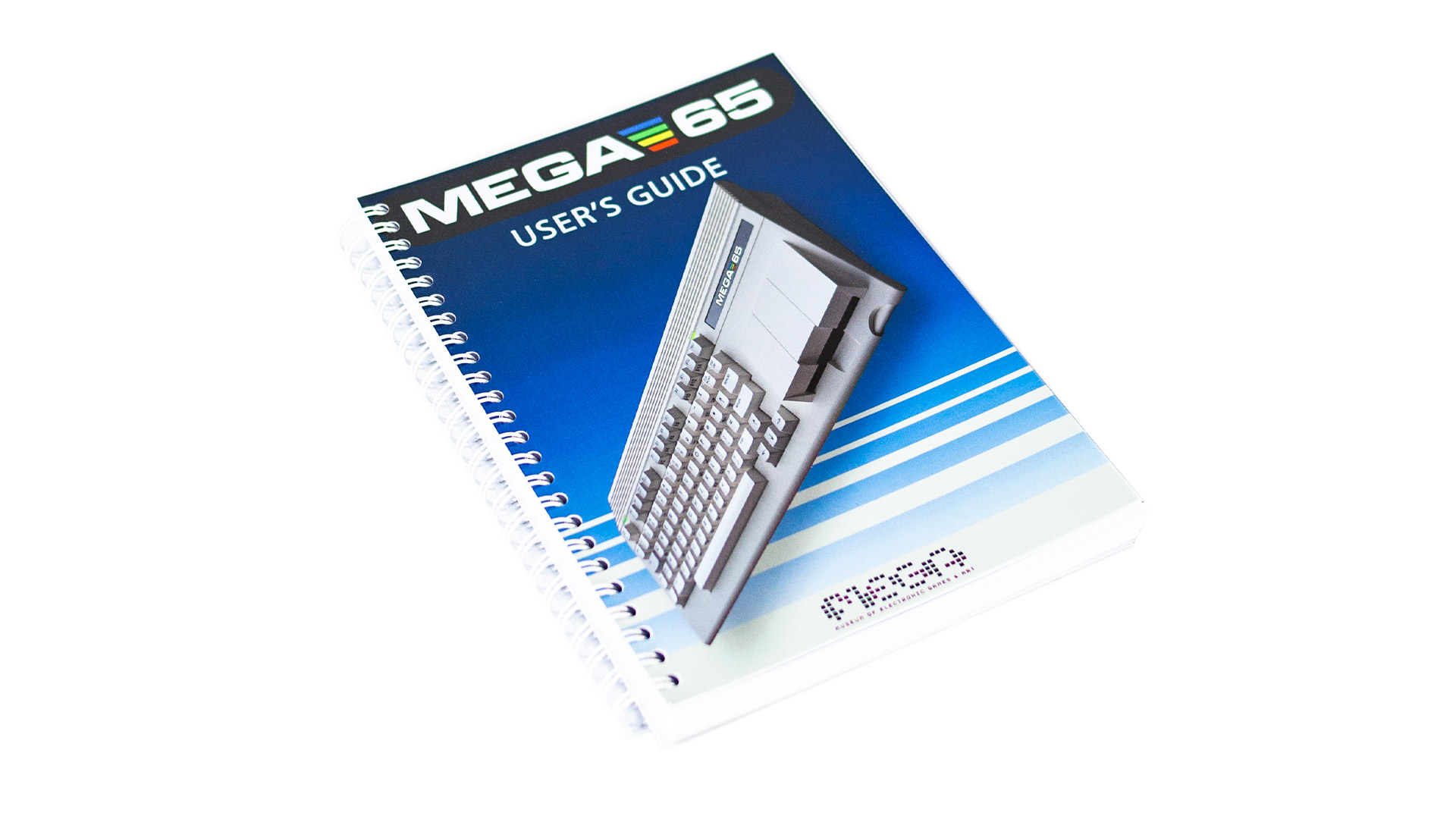
What you won't get is an already set-up system, a nice case, or simple to attach peripherals, but I haven't had too much trouble with it, except trying to get a formatted hard disk for an Amiga into an SD card with files on it, but I figured it out :)